

 English

A toy label is not decoration. It is the legal record that the product exists, who made it, when it was made, and what a parent must know before handing it to a child. Get the label wrong and a container can be stopped at customs, a listing can be pulled, or a recall can be triggered — and recalls are where label errors become expensive.
This guide covers what toy labeling requirements actually demand on the label itself: the CE marking rules and warnings in the European Union, the CPSIA tracking label in the United States, what EN 71 and ASTM F963 mean for the artwork, and what to confirm with a toy label manufacturer before you order.
What Counts as a Toy Label?
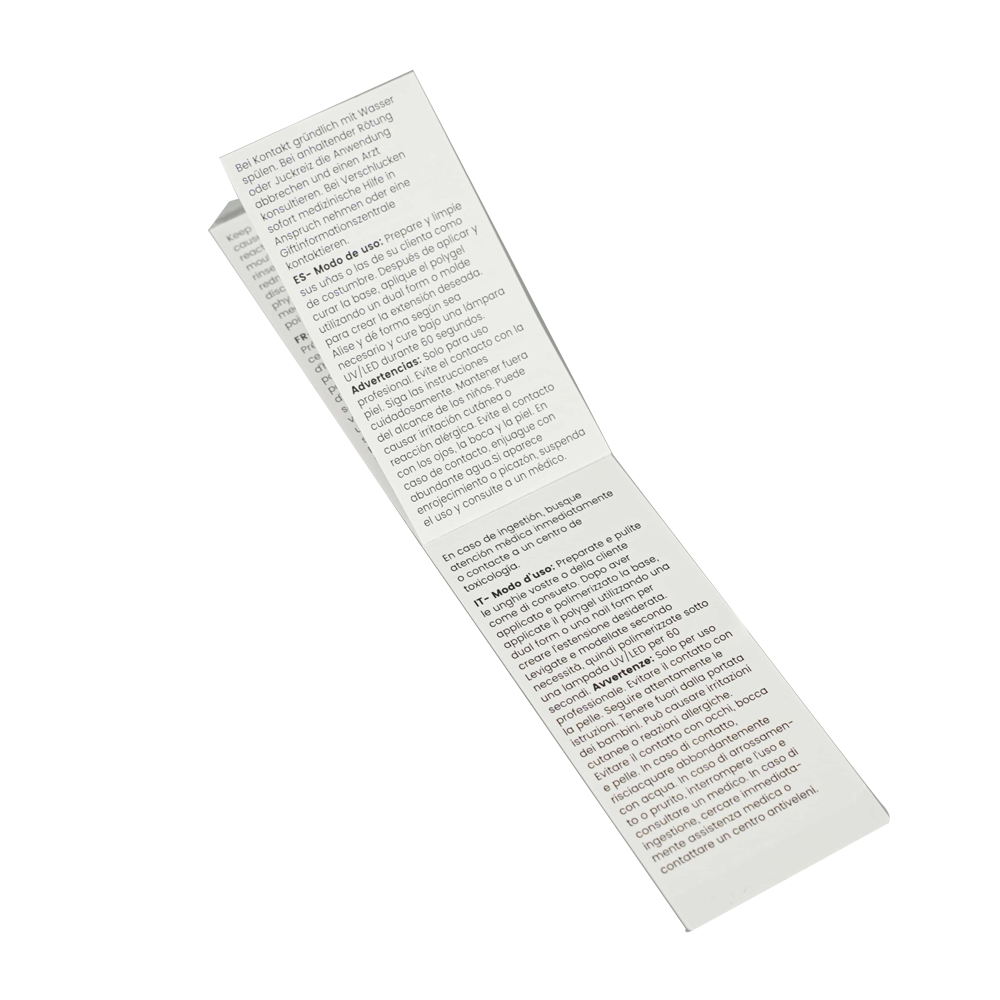
"Toy label" covers three different things, and regulators treat them separately. The first is the mandatory marking — CE marking in the EU, tracking information in the US — which must be permanently fixed to the product or its packaging. The second is the warning and age-grading panel, which is regulated language that has to be reproduced exactly. The third is the brand and information label: the name, artwork, barcode and care information a brand chooses to print.
All three usually end up on the same pressure-sensitive toy Packaging Labels, which is why toy labels are among the most content-dense label jobs in packaging. A toy box may need a multilingual warning block, a small-parts symbol, a batch code, a manufacturer address and a barcode inside a panel smaller than a business card.
That density is a production issue, not just a design one: fine warning type has to stay legible after being printed, die-cut, applied and handled. It is the same reason we print dense regulatory panels on waterproof BOPP labels rather than lightweight paper for products that will be handled in a nursery.
What Must Appear on a Toy Label in the EU?
Under the Toy Safety Directive 2009/48/EC — still the rule that applies to toys placed on the EU market today — a toy must carry the following information. The requirements carry over essentially unchanged into the new regulation that replaces it.
| Required element | What it means on the label |
|---|---|
| CE marking | Visible, legible and indelible. Applied to the toy or to an affixed label; if that is not possible, to the packaging or an accompanying document. If it cannot be seen from outside the packaging, it must also appear on the packaging. |
| Type, batch or serial number | A batch or run code that lets the toy be traced back to a production lot — this is the element that makes a targeted recall possible instead of a blanket one. |
| Manufacturer identification | Name, registered trade name or trademark, plus a postal address. The new regulation adds an electronic address to this list. |
| Importer identification | Where an importer places the toy on the market, the importer's name and address must appear as well. |
| Warnings | In the official language(s) of the member state where the toy is sold — not English by default. This is the single most common reason a toy label fails on a multilingual SKU. |
| Age suitability | Where relevant, the age range the toy is intended for, or the age warning when the toy is unsuitable below a threshold age. |
One clarification that trips up artwork teams: for toys assessed under internal production control (Module A) or EU-type examination (Module B+C), no notified body number is printed next to the CE marking. If a notified body issued a certificate, its details are recorded in the technical documentation, not stamped onto the label.
What Does EN 71 Labeling Require?
EN71 labeling requirements are widely misunderstood. EN 71 is not a label standard — it is the family of harmonised test standards that decide whether a toy may carry the CE marking at all. What the label has to say is driven by the directive; EN 71 is what the toy must pass.
The parts that come up most often in a toy brand's testing plan:
| Standard | Covers |
|---|---|
| EN 71-1 | Mechanical and physical properties — sharp edges, small parts, cords, tip-over. This is the part that generates the small-parts warning on the label. |
| EN 71-2 | Flammability — which materials may be used and how they must perform. |
| EN 71-3 | Migration of certain elements — 19 elements with limits that vary by whether the material is ingested, mouthed or only touched. |
| EN 71-9 / -10 / -11 | Organic chemical compounds — requirements, sample preparation and analytical methods. |
| EN 71-12 | N-nitrosamines and N-nitrosatable substances — relevant to balloons, finger paints and rubber components. |
| EN 71-7 | Finger paints — substances and labelling. |
| EN 71-8 / -14 | Activity toys for domestic use, and trampolines. |
| EN 62115 | Electric toys — the additional standard that applies whenever a toy contains a battery or a circuit. |
The practical takeaway for label artwork: EN 71-3 and the chemical parts determine which materials and inks are acceptable, and the label is part of the toy's material set. A custom toy label printed on a substrate or with an adhesive that fails the relevant element limits can fail the toy, even if the toy itself is fine. This is why we specify facestock, adhesive and ink against the test category rather than just against appearance — the same discipline we describe in our guide to choosing label materials.
What Does the CPSIA Tracking Label Have to Contain?
In the United States, the CPSIA tracking label requirements come from section 103 of the Consumer Product Safety Improvement Act, codified at 15 U.S.C. § 2063(a)(5)(A). Every children's product must bear a distinguishing mark that is visible and legible and permanently affixed to the product and its packaging, to the extent practicable.
Four items of information must be ascertainable from that mark:
1. Manufacturer, importer or private labeler name
Whichever party is responsible for the product reaching the market. A private label brand is not exempt simply because it does not own a factory — its name goes on the tracking label.
2. Location and date of production
Where and when the product was made. The date is the date of production, not the date the label was printed, and not the ship date.
3. Batch, run number or other identifying characteristics
The cohort identifier. This is what lets a recall target one production run rather than an entire product line — the difference between pulling 5,000 units and pulling three years of inventory.
4. Any other information that identifies the specific source
For example, the address of the manufacturing plant. The information may be in code form, provided the consumer knows who to contact to interpret the code.
"Permanent" is defined by what can reasonably be expected to remain on the product during its useful life. A mark on disposable packaging need only be durable enough to reach the consumer — so the packaging tracking label is a far less demanding spec than the one on the product itself. Getting that distinction right usually saves cost on a run of children's Product Labels.
What Warnings Must a Toy Label Carry?

Warning language is regulated text, not copywriting. The three warnings that appear on most toy SKUs:
Small parts and age warning
In the EU, a toy that is unsuitable for children under 36 months because of small parts must carry the warning "Not suitable for children under 36 months" together with the corresponding pictogram — the crossed-out 0–3 symbol. In the US, small-parts hazards are governed under the Federal Hazardous Substances Act at 16 CFR 1501: toys intended for children under three must not present a small-parts hazard at all, while toys for children aged three to six that do contain small parts must carry the specified choking-hazard warning. These are safety labels for toys, and the wording and symbol placement are prescribed.
Age grading
Age grading is not a marketing choice — it follows the manufacturer's age determination and, in the US, the Consumer Product Safety Commission's age determination guidelines. The grade printed on the label must match the technical file, and it must match on every language version of the artwork.
Battery, magnet and chemical warnings
Electric toys, toys containing magnets, and toys with chemical components each trigger additional toy warning labels. Where a toy is sold in the US, ASTM F963 — mandatory under CPSIA — sets the toy safety requirements and the associated warning text.
Because warning panels are language-specific, multilingual toy labels are usually built as a folded or booklet construction rather than a single flat panel. If your warning text is outgrowing the available panel, the format question is worth settling before the artwork, and our comparison of double-layer and three-layer label constructions covers when a multi-page label is the cheaper answer.
How Do EU and US Toy Label Rules Differ?
| Point | European Union | United States |
|---|---|---|
| Primary mark | CE marking | CPSIA tracking label |
| Traceability | Type, batch or serial number | Batch or run number plus location and date of production |
| Language | Official language of each member state of sale | English |
| Product and packaging | CE mark on toy or affixed label; packaging if not visible from outside | Tracking label on product and packaging, to the extent practicable |
| Conformity document | EC Declaration of Conformity (to be replaced by the Digital Product Passport) | Children's Product Certificate based on third-party testing |
| Core safety standard | EN 71 series, EN 62115 for electric toys | ASTM F963 |
Great Britain is a separate case. In 2026, CE marking continues to be recognised for toys placed on the GB market, with UKCA as an option rather than a replacement — so a single CE-marked label design still serves both GB and the EU.
What Does the New EU Toy Safety Regulation Change?
This is the development toy brands should plan around now. Regulation (EU) 2025/2509 — the new Toy Safety Regulation — entered into force on 1 January 2026 and will fully apply from 1 August 2030, when it repeals Directive 2009/48/EC. Until that date, toys continue to be placed on the market under the existing directive, and toys lawfully placed on the market before 1 August 2030 may continue to be made available.
Three changes matter for labels:
A Digital Product Passport replaces the declaration of conformity
From 1 August 2030, the manufacturer must create a Digital Product Passport for each toy model before placing it on the market, reachable through a data carrier and a unique product identifier. Mandatory content includes the manufacturer's identity and address, the economic operator responsible, the EU law complied with, the standards applied, notified body certificate details where relevant, the CE marking, and any allergenic fragrance subject to labelling. The passport replaces the standalone EU Declaration of Conformity for toys. The label itself does not disappear — but a data carrier joins it.
Chemical rules tighten
The general prohibitions extend to endocrine disruptors, specific target organ toxicants, and respiratory and skin sensitisers, with new bans on intentionally added PFAS and listed bisphenols. For label stock, this is a specification question: adhesives, coatings and inks are part of the toy's material set and are covered by the same regime.
EN 71 must be re-cited
EN 71 remains the harmonised standard framework, but the standards must be revised and cited under the new regulation before they confer a presumption of conformity from 1 August 2030. An outdated EN 71 edition referenced in a technical file will not carry the same weight — worth checking with your testing lab when you next refresh the file.
Technical documentation must now be kept for ten years after the toy is placed on the market.
What Label Material Should a Toy Label Use?
Toy labels have an unusual combination of demands: they must be permanent, they must survive handling by children, and they may be mouthed. The specification decisions that matter most:
Facestock. Coated paper is fine for an outer carton that is discarded. For a label applied to the toy itself, or to a bottle, board book or bath toy, a synthetic film such as BOPP or PE holds up far better and resists tearing when a child picks at it.
Adhesive. Permanent adhesives are the default for tracking information, because a mark that peels off is not a permanent mark. Where the label is applied to a low-surface-energy plastic, the adhesive has to be matched to the substrate or the label will lift at the edges within weeks.
Inks and coatings. Warning panels are read at small sizes, so contrast and dot gain control matter. A matt varnish or laminate reduces glare and scuffing; a gloss finish on a dense warning block can make fine type harder to read under shelf lighting.
Construction. Where the warning text is long or multilingual, a folded or booklet label keeps the panel readable without shrinking the type. See our guide to multi-layer labels for how that construction works.
Print method is the other lever. Short-run and frequently revised toy SKUs usually suit digital printing because artwork changes do not carry plate costs, while long-run cartons suit flexo. Our comparison of digital and flexo label printing sets out where the break-even sits.
What Mistakes Get Toy Labels Rejected or Recalled?
| Mistake | Why it costs money |
|---|---|
| Warning text in English only on an EU SKU | The toy cannot be lawfully sold in that member state. The whole print run has to be relabelled. |
| Batch code omitted or not unique per run | A defect cannot be traced to a lot, so a recall widens to the entire product line. |
| Tracking label on the carton only | US rules require the mark on the product and the packaging to the extent practicable — carton-only is a common failure. |
| Age grade on the label differs from the technical file | Undermines the conformity assessment and is an easy target in a customs or marketplace review. |
| Adhesive or ink not covered by the material assessment | The label becomes a failing component under EN 71-3 or the chemical provisions, taking the toy down with it. |
| Small-parts symbol missing or wrong size | The warning is prescribed in both wording and presentation; a resized or reflowed symbol does not comply. |
What Should You Check Before Ordering Toy Labels?
Before a toy label printing run goes on press — or before you place a custom toy Packaging Labels order with any supplier — confirm the following. This is the checklist we walk through with every toy brand, and it is the list that prevents a reprint:
| Check | What to confirm |
|---|---|
| Markets of sale | Which member states, and whether the US, GB or Canada is included — this decides the language set and which marks appear. |
| Mandatory content list | CE mark, batch code, manufacturer and importer details, warnings, age grade — signed off against the technical file. |
| Substrate | What surface the label is applied to, and whether it will be mouthed or handled — paper, BOPP or PE. |
| Permanence | Whether the mark must survive the useful life of the product (product label) or only reach the consumer (packaging label). |
| Material compliance | That the facestock, adhesive and ink are covered by the toy's material assessment. |
| Artwork and proof | A physical proof at final size, so warning type is checked at the size a parent will actually read it. |
| Format and line | Whether labels are applied by hand or on an automatic line, and the core size and unwind direction if machine-applied. |
Toy labels sit alongside food, cosmetic and supplement labels as regulated packaging, and the same principle applies across all of them: the label is part of the product's compliance, not a finishing touch. Our guides to cosmetic labeling requirements, detergent labeling requirements and supplement labeling requirements follow the same approach for those categories.
If you are specifying a toy label and want the material, construction and print method checked against your market and your application line, send us the artwork panel size, the substrate the label goes on and the list of markets. We will come back with a specification and a proof — you can see the formats we produce on our label products page, or send the details and we will reply within one working day.
Conclusion
Toy labeling is unforgiving because it is checked twice — once by a regulator and once by a parent. The EU requires CE marking, a batch or serial number, manufacturer and importer details, warnings in the language of each market, and an age grade. The US requires a permanent tracking label carrying the responsible party, the location and date of production, and a batch identifier. EN 71 and ASTM F963 decide whether the toy qualifies for those marks at all, and the label's own materials sit inside that assessment.
With Regulation (EU) 2025/2509 in force since January 2026 and applying from August 2030, the direction is clear: more traceability, a digital product passport alongside the printed mark, and stricter chemical limits. Designing labels that can carry a data carrier without losing the warning panel is a sensible place to start. For a custom toy label run that gets the compliance content and the production spec right the first time, talk to JINXIN Packaging.
