

 English

A dietary supplement lives or dies on its label. Before a customer reads a single claim, the label has to satisfy regulators in every market the bottle ships to — and the rules for dietary supplement labels are stricter than for almost any other packaged good. Get the panel wrong and a shipment can be stopped at the border, pulled from a listing, or fined.
This guide walks through what must appear on a supplement label in the United States and the European Union, what the Supplement Facts panel has to contain, how claim rules work, and what to watch for on the label material itself.
What Counts as a Dietary Supplement Label?

In the United States, a dietary supplement is a product intended to supplement the diet that contains a dietary ingredient — a vitamin, mineral, herb or other botanical, amino acid, enzyme, organ tissue, or a concentrate, metabolite, constituent, extract or combination of these. It is sold in a form you swallow: tablet, capsule, softgel, gelcap, powder, or liquid.
That definition matters because it decides which rulebook applies. A product that looks like a supplement but is marketed with a drug claim is regulated as a drug. A product that looks like a supplement but is presented as a conventional food falls under food labeling rules instead. The label is usually the evidence a regulator uses to decide.
For the packaging side, a supplement bottle label is almost always a pressure-sensitive label applied to HDPE, PET or glass, which means the facestock and adhesive have to survive moisture, oil and handling — the same constraints we cover in our guide to waterproof BOPP labels.
What Must Appear on Every Supplement Label?
Under the Federal Food, Drug, and Cosmetic Act and 21 CFR 101.36, a US dietary supplement label must carry the following elements. None of them are optional.
| Required element | What it means in practice |
|---|---|
| Statement of identity | The words "dietary supplement" must appear — this is the single most commonly missed item on a custom supplement label. |
| Net quantity of contents | Weight, measure or count, in the lower third of the principal display panel, in both metric and US units. |
| Supplement Facts panel | The heading must read exactly "Supplement Facts" — not "Nutrition Facts". |
| Ingredient list | Dietary ingredients first, then "Other Ingredients" in descending order of predominance by weight. |
| Name and place of business | Manufacturer, packer or distributor, with city, state and postcode. "Distributed by" is acceptable. |
| Adverse event contact | A domestic address or domestic phone number for consumers to report serious adverse events. |
| Allergen declaration | The nine major allergens must be declared by their common name — including sesame, which became mandatory on 1 January 2023. |
| DSHEA disclaimer | Required only if a structure-function claim is made, but it must then appear verbatim. |
Because the panel is dense with small type, print resolution and registration are not cosmetic issues on supplement label printing — a fuzzy micronutrient line is a compliance risk, not just a design flaw. This is one reason we print supplement labels on press equipment that holds fine type cleanly; you can see the range on our label printing products page.
What Does the Supplement Facts Panel Have to Include?
The Supplement Facts panel is a structured table, not free-form artwork. It must show:
Serving size and servings per container
Serving size must be given as a common household measure followed by the metric equivalent, and it has to reflect the amount customarily consumed. Servings per container is calculated from that figure.
Amount per serving for every dietary ingredient
Each dietary ingredient must be listed by name with its quantity per serving, in the unit that matches the reference value. Amounts are not rounded to whatever looks tidy on the artwork — the rounding rules are prescribed.
Percent Daily Value
Where a Daily Value has been established, the panel shows the percentage that one serving delivers. Ingredients with no established Daily Value use a symbol and a footnote stating that the Daily Value is not established. When the percentage column is used, the panel must also carry the footnote explaining that Daily Values are based on a 2,000 calorie diet.
Proprietary blends
A blend can hide individual ingredient quantities, but not the total. The total weight of the blend must be declared, and every ingredient in it must still be named. A blend listed without a total weight is a defect regulators look for specifically.
What Are the Rules for Structure-Function Claims?
A structure-function claim describes how a nutrient or ingredient affects the normal structure or function of the body — "supports immune health", "helps maintain healthy joints". These claims do not need pre-approval, but they come with two conditions: they must be truthful and not misleading, and they must be accompanied by the DSHEA disclaimer.
The disclaimer has to read, word for word:
This statement has not been evaluated by the Food and Drug Administration. This product is not intended to diagnose, treat, cure, or prevent any disease.
Health claims — claims linking an ingredient to reducing the risk of a disease — follow a different and much harder route, and nutrient content claims must match the definitions set out in the labeling regulations. Anything that promises to treat or cure crosses into drug territory.
How Do Allergen and Ingredient Declarations Work?
The nine major food allergens must be declared either in the ingredient list in a way that clearly names the allergen, or in a separate "Contains" statement immediately after the ingredient list. Common names only — a scientific name alone does not satisfy the rule.
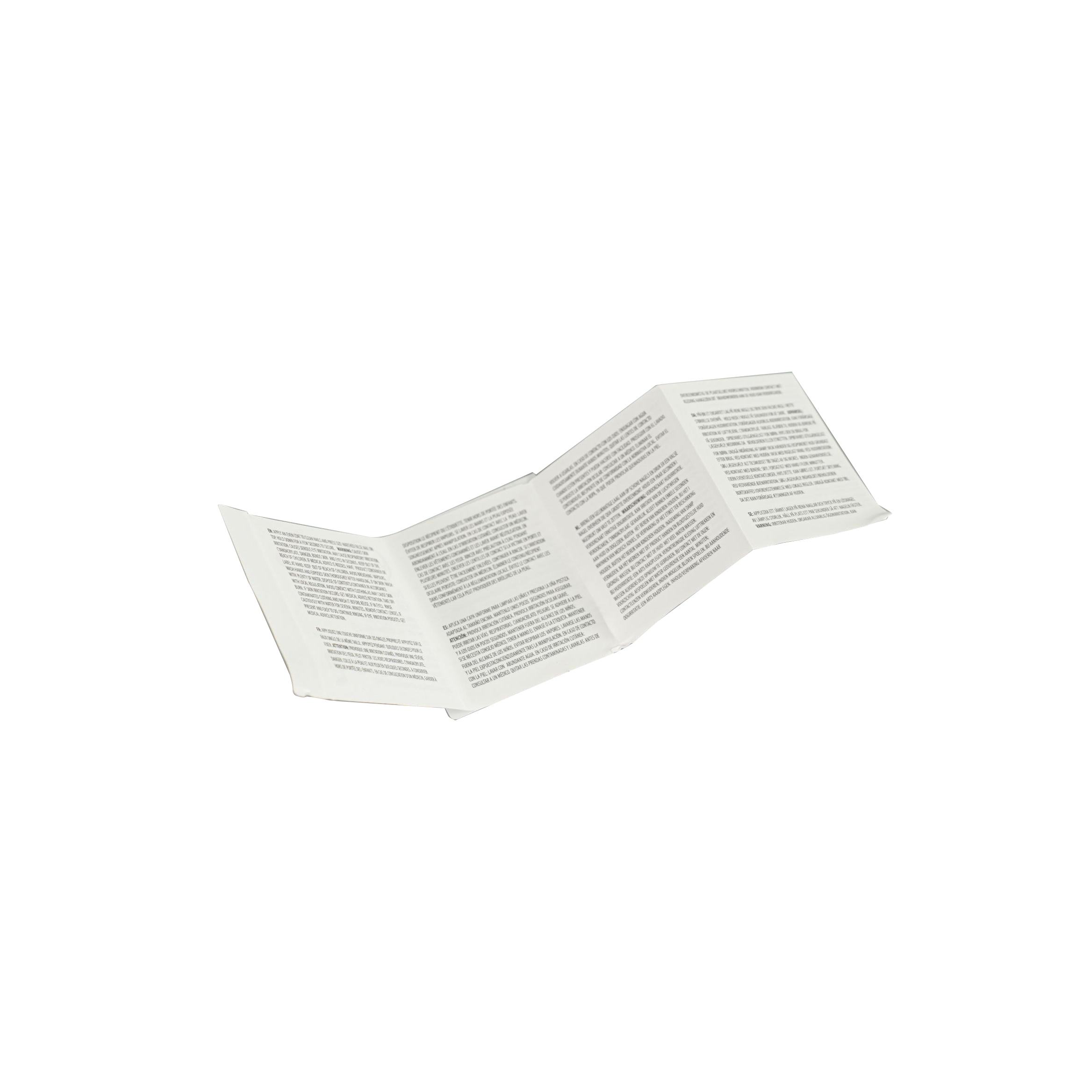
For supplement bottle labels this is where the layer count becomes a real design question. A Supplement Facts panel, an ingredient list, allergen statements, an adverse event contact, a disclaimer and multilingual text frequently will not fit on one panel. That is exactly the problem a multi layer label solves — the front panel stays clean while the regulatory text sits on a peel-back layer underneath. We compared those structures in detail in our article on double layer vs three layer labels.
How Do EU Supplement Label Rules Differ From US Rules?
In the European Union, food supplements sit under Directive 2002/46/EC, while the labeling itself follows Regulation (EU) No 1169/2011, the Food Information to Consumers regulation. Health claims are governed separately by Regulation (EC) No 1924/2006. The result is a set of mandatory warnings that have no direct US equivalent.
| Element | United States | European Union |
|---|---|---|
| Identity wording | "Dietary supplement" | Name must include "food supplement" |
| Panel format | "Supplement Facts" table | Nutrition declaration per 100 g and per portion |
| Reference values | % Daily Value | % NRV (Nutrient Reference Values) |
| Claims | Structure-function claims plus DSHEA disclaimer | Only claims on the EU Register of authorised health claims |
| Mandatory warnings | Adverse event reporting contact | Do not exceed the recommended daily dose; not a substitute for a varied diet; keep out of reach of young children |
| Durability | No general requirement on the label panel | Best-before or durability date plus storage conditions |
Two practical consequences follow. First, an EU-compliant custom supplement label carries noticeably more text than a US-only version, so panel space planning has to start from the strictest market you ship to. Second, maximum and minimum vitamin and mineral levels are set nationally in the EU, and several member states require the product to be notified before it goes on sale — the label text has to be final before that notification is filed.
If your range spans several regulated categories, the same discipline applies across them. We covered the equivalents for cosmetic labeling requirements and detergent labeling requirements in earlier guides.
What Label Material Should You Use for Supplement Bottles?
Most supplement bottles are HDPE, PET or glass, and they are handled in bathrooms and kitchens — warm, damp environments where a paper label will cockle or lift. For that reason most supplement work is printed on synthetic facestocks: white BOPP, clear BOPP, or a matte white PP for a softer, more premium look.
Three specification points matter more than the rest:
Adhesive for low-surface-energy plastic
Standard permanent adhesive can edge-lift on HDPE. A grade formulated for low-surface-energy substrates is the difference between a label that stays flat for two years and one that flags within weeks. Our overview of label material selection goes deeper on matching facestock and adhesive to the container.
Moisture and oil resistance
Softgels and oil-based capsules leave residue on the hands and on the bottle. A film label with a protective varnish or laminate wipes clean; an uncoated paper label stains.
Surface finish and legibility
A matte finish reduces glare under bathroom lighting and is easier to read at the small type sizes a Supplement Facts panel requires. Gloss gives more color punch on the brand panel. Many supplement labels split the difference: gloss front panel, matte regulatory panel.
What Mistakes Get Supplement Labels Rejected?
Across the supplement label projects we print, the same defects recur. All of them are avoidable at the artwork stage:
| Mistake | Why it fails |
|---|---|
| Omitting the words "dietary supplement" | The statement of identity is mandatory and the product loses its supplement status without it. |
| Structure-function claim with no DSHEA disclaimer | The claim and the disclaimer are a matched pair; one without the other is a violation. |
| No adverse event contact | A domestic address or phone number is required on the supplement label itself. |
| Proprietary blend with no total weight | Individual quantities may be hidden; the total weight of the blend may not. |
| Allergen named only by scientific name | The common name of the allergen has to appear. |
| Unauthorised health claim on EU stock | Only claims on the EU Register may be used, regardless of what is permitted in the US. |
| Missing EU mandatory warnings | The daily dose warning, the varied diet statement and the keep-away-from-children warning are all required. |
There is also a quieter failure mode: the panel is correct on screen but unreadable on the bottle. Fine type, reversed-out text on a dark background, and low-contrast color combinations all survive a PDF review and fail in the hand. Proofing on the actual substrate, at actual size, is worth more than any screen review.
What Should You Check Before Ordering Supplement Labels?
Beyond the panel itself, supplement labeling requirements cover claims, allergens, the adverse event contact and the identity statement. Four questions come up on almost every project.
Where can I find the full dietary supplement label requirements?
The US dietary supplement label requirements sit in 21 CFR 101.36, the regulation that defines the Supplement Facts panel and its accompanying statements. The FDA supplement labeling requirements for allergens come from the food allergen labelling provisions, and the claim rules come from DSHEA. Build your checklist from those three sources rather than from a template found online — templates go stale, and allergens are where they go stale first.
What must appear on a dietary supplement label?
At minimum: the words "dietary supplement", the net quantity of contents, a Supplement Facts panel, an ingredient list, the name and place of business, an adverse event reporting contact, and any required allergen declarations. Add the DSHEA disclaimer whenever a structure-function claim appears. That is the complete minimum — anything less is a defect, not a design choice.
Should the Supplement Facts label be designed first or last?
First. The Supplement Facts label is the largest fixed block of text on the package, and its size decides how much panel area is left for branding and product name. Design the panel around it rather than fitting it in at the end, which is the point at which most space problems appear.
How do I choose a supplement label manufacturer?
Look for three things: proven experience with small-type regulatory panels, a film facestock with an adhesive rated for HDPE and PET, and the ability to supply both roll and sheet. If you are launching private label supplement labels for a retailer, ask for a sample on the actual container before the production run — proofing on the real bottle is the only reliable way to confirm the fine type stays legible.
Are vitamin labels different from other supplement labels?
No — vitamin labels follow the same rules as any other supplement. The one practical difference is that vitamins and minerals almost always have an established Daily Value, so the percentage column is filled in rather than carrying the not-established symbol.
Conclusion
Supplement labeling is a compliance exercise first and a design exercise second. The non-negotiables on a US dietary supplement label are the statement of identity, the net quantity, the Supplement Facts panel, the ingredient and allergen declarations, the business address and the adverse event contact — plus the DSHEA disclaimer whenever a structure-function claim appears. On EU stock, add the "food supplement" identity wording, the nutrition declaration with % NRV, the three mandatory warnings, the durability date, and claims restricted to the authorised register.
Plan the panel before you plan the artwork. If the required text will not fit, the answer is usually a multi-layer or booklet structure rather than smaller type, and the label material needs to be a film facestock with an adhesive rated for HDPE and PET. Get those three things right — space, structure and substrate — and the label passes review the first time.
If you are sourcing custom supplement labels for a new range, we print supplement, cosmetic and food labels on roll or sheet with FSC certified stock. Send us your panel layout and we will confirm sizes, materials and a sample before you commit to a production run.
