

 English

Detergent labels carry more mandatory information than most other Product Labels, and the rules differ between the US and the EU. For brands selling cleaning products across both markets, detergent labeling and ingredient disclosure requirements are usually the single biggest constraint on label design — not the artwork.
This guide summarises what US and EU rules require on a detergent label, how ingredient disclosure is handled in each market, and how to keep that information legible and durable once the product is in use. It is a practical overview, not legal advice — always confirm the current rules with your regulatory team before printing.
Why Detergent Labels Face Stricter Disclosure Rules Than Many Products
A detergent label has to do three jobs at once: identify the product, declare its contents, and warn about hazards. That is a heavier load than, for example, a food label or a simple branding label, and it is made harder by the fact that cleaning products are often sold in small bottles where the printable surface is limited.
The regulatory pressure has also increased. Several markets have moved from partial disclosure toward full ingredient transparency, which means labels now carry longer ingredient lists than they did a decade ago — and the label has to remain readable.
What Must Appear on a Detergent Label in the US?
In the US there is no single agency that pre-approves a household cleaning product label, but several overlapping rules apply:
Product identity and net quantity — required under the Fair Packaging and Labeling Act.
Responsible company — the name and place of business of the manufacturer, packer, or distributor.
Hazard warnings — if the product is a hazardous substance, the Federal Hazardous Substances Act requires an appropriate signal word, precautionary statements, and first-aid instructions.
Pesticide registration — products making antimicrobial or pesticidal claims fall under EPA rules and need registration, which affects label content and approval timing.
State ingredient disclosure — California's Cleaning Product Right to Know Act and New York's household cleansing product disclosure programme require ingredient information on the label and/or online.
In practice, the US requirement that catches most brands out is not federal — it is the state-level ingredient disclosure rules, which change how much information has to fit on the label.
What Does EU Detergent Labeling Require?
In the EU, detergent labelling is governed mainly by the Detergents Regulation, with hazard labelling under the CLP Regulation. The label typically has to show:
Ingredient content ranges — surfactants and other ingredient groups declared in defined bands rather than exact percentages, such as less than 5%, 5% to 15%, 15% to 30%, and 30% and above.
Allergens — certain fragrance allergens must be declared when they exceed the set threshold.
Preservatives and other specified ingredients — declared where present.
A website reference — pointing to the ingredient data sheet, which carries the full ingredient list.
CLP hazard information — pictograms, signal word, and hazard and precautionary statements where the mixture is classified as hazardous, plus a unique formula identifier (UFI) for mixtures supplied to consumers.
Because the EU approach splits disclosure between the label and a website, the label itself can stay shorter — but the mandatory hazard and content information still has to be legible on the package, and it must be in the official language or languages of the market where it is sold.
How Should Ingredient Disclosure Be Presented on a Detergent Label?
The practical challenge is fitting disclosure content, hazard information, and multiple languages onto a container that may be as small as a 500 ml bottle. There are three workable approaches:
| Approach | When it works best |
| Single-panel label | Larger containers where the full disclosure list fits without shrinking the type below a readable size. |
| Multi-layer or peel label | Small bottles where a second layer can carry the ingredient list and warnings while the front panel stays clean. |
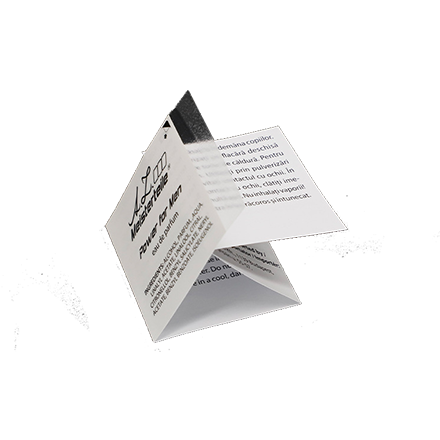
| booklet label | Multi-language markets and products with long ingredient lists, instructions, and safety text. |
For products sold in several countries, a multi-layer label or booklet structure usually carries the full text without crowding the main design — and it keeps the type size large enough to stay legible. This is the same approach many brands use for cosmetic labeling requirements, where ingredient lists and warnings have to fit on small containers.
How Do You Keep Detergent Labels Legible and Durable?
A disclosure statement that rubs off or blurs does not meet the requirement in practice. Detergent packaging is exposed to water, surfactants, oils, and repeated handling, so the label material matters as much as the wording.
Use a waterproof film material rather than paper for anything stored or used near water.
Choose a permanent adhesive matched to the bottle material — HDPE, PET, and glass behave differently.
Protect the print with a film laminate so the ingredient list and hazard pictograms stay readable.
Check that text stays legible at the final size after the disclosure list is laid out.
Keep the batch code and any UFI clear of curves and seams.
Buyers sourcing labels for cleaning products can review our custom waterproof labels or custom adhesive labels for a starting point. If you tell us the bottle material, the market, and the required statements, we can confirm a label structure that carries the content clearly — send your requirement here.
Conclusion
Detergent labeling and ingredient disclosure requirements differ sharply between the US and the EU. The US relies on a combination of federal rules, hazard warnings, and state-level disclosure laws, while the EU uses defined ingredient content ranges on the label plus a website for the full list, alongside CLP hazard labelling.
For brands, the practical takeaway is the same in both markets: the label has to carry more text than the package was designed for, and that text has to stay readable through the product's life. Planning the label structure around the disclosure requirements — rather than adapting artwork afterwards — avoids reprints, relabelling, and the compliance risk that comes with them.
