

 English

Extended Content Label vs Booklet Labels vs Peel Labels: A Complete Guide for Modern Product Packaging
In today's competitive packaging market, Product Labels are no longer limited to displaying basic information such as product names, barcodes, or brand logos. Many industries require additional space for instructions, regulatory information, multilingual content, ingredients, warnings, and promotional messages while maintaining an attractive product appearance.
This is where advanced labeling solutions such as extended content labels, booklet labels, and peel labels become essential. These innovative label formats allow brands to maximize available packaging space without increasing product size or changing package design.
For industries including pharmaceuticals, cosmetics, food and beverage, chemicals, electronics, and consumer products, choosing the right multi-functional label solution can improve compliance, enhance customer experience, and strengthen brand communication.

What Is an Extended Content Label?
An extended content label is a specialized label design that provides significantly more printable space than a standard pressure-sensitive label.
Unlike traditional labels that contain only a single printable surface, extended content labels use additional layers, folds, or multiple panels to create extra space for detailed information.
An extended content label can include:
Product instructions
Safety information
Regulatory requirements
Ingredient lists
Usage guidelines
Multiple language translations
Marketing messages
QR codes and technical data
This makes extended content labels particularly valuable for products that require extensive information but have limited packaging space.
For example, pharmaceutical products often require detailed dosage instructions, warnings, and legal information. A conventional label may not provide enough room, while an extended content label allows manufacturers to meet compliance requirements without compromising packaging design.
What Are Booklet Labels?
Booklet labels are one of the most popular types of extended content labels.
A booklet label consists of a multi-page booklet attached to the product container. Similar to a small instruction manual, it provides significantly more information while maintaining the footprint of a standard label.
Unlike ordinary labels, booklet labels can contain several pages of printed content while occupying minimal surface area on the package.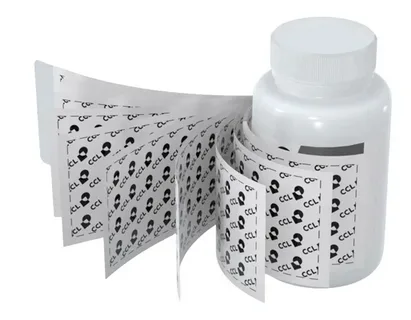
Common applications include:
Pharmaceutical bottles
Medical devices
Cosmetic packaging
Chemical containers
Agricultural products
Food supplements
Industrial products
Booklet labels are especially useful when brands need to provide multilingual information. Instead of printing separate labels for different markets, manufacturers can include multiple languages within one booklet label design.
How Do Booklet Labels Work?
The structure of booklet labels usually includes multiple components:
Base Label
The base label is permanently attached to the product surface and provides stability.
Multi-Page Insert
The folded booklet contains additional printed information and can be opened by consumers when needed.
Adhesive System
A specially designed adhesive ensures that the booklet remains securely attached while allowing users to access the additional pages.
Protective Layer
Some booklet labels include protective coatings or laminations to improve resistance against moisture, chemicals, and abrasion.
The combination of these elements creates a durable labeling solution suitable for demanding environments.
What Is a Peel Label?
A peel label is a type of layered label that allows users to lift, peel, or open part of the label to reveal additional information underneath.
Unlike booklet labels, which usually open like a small booklet, peel labels typically use a peel-back structure where the top layer can be removed or reopened.
Peel labels are commonly used for:
Promotional campaigns
Product instructions
Limited-edition packaging
Warranty information
Variable data printing
Regulatory information
A peel label provides extra communication space while maintaining a clean and compact product appearance.
Extended Content Label vs Booklet Labels vs Peel Labels
Although these three label solutions serve similar purposes, their structures and applications are slightly different.
An extended content label is a broader category of labels designed to provide additional printable space.
Booklet labels are a specific type of extended content label that uses a folded booklet format.
Peel labels use a peelable structure where users open the label to access hidden content.
The best choice depends on:
Amount of information required
Product surface area
Application environment
Regulatory requirements
User interaction expectations
Advantages of Extended Content Labels
More Information Without Larger Packaging
One of the biggest benefits of an extended content label is the ability to provide extensive information on small products.
This is particularly important for:
Small pharmaceutical containers
Cosmetic bottles
Electronic components
Chemical products
Brands can include all required information without redesigning the product package.
Improved Regulatory Compliance
Many industries have strict labeling requirements.
For example:
Medical products require safety instructions
Chemicals require hazard information
Food products require ingredient details
Cosmetics require usage and ingredient information
Extended content labels help manufacturers meet these requirements while maintaining professional packaging aesthetics.
Better Multilingual Packaging Solutions
Global brands often need packaging information in multiple languages.
Traditional labels may become overcrowded when adding several translations.
Booklet labels and peel labels provide additional space, allowing companies to create one universal packaging solution for international markets.
Applications of Booklet Labels and Peel Labels
Pharmaceutical Industry
Pharmaceutical companies frequently use booklet labels because products require detailed instructions, warnings, dosage information, and legal statements.
Cosmetic Industry
Cosmetic brands use extended content labels for:
Ingredients
Product benefits
Usage instructions
Brand stories
Food and Beverage
Food manufacturers use multi-layer labels for:
Nutrition information
Recipes
Promotional campaigns
Multiple languages
Chemical Products
Chemical manufacturers require durable labels containing:
Safety instructions
Handling information
Compliance details
Consumer Electronics
Electronics companies use peel labels and booklet labels for:
User instructions
Warranty details
Product specifications
Materials Used for Extended Content Labels
Professional label manufacturers select materials based on product requirements.
Common materials include:
Paper Labels
Suitable for general indoor applications where cost efficiency is important.
PP Labels
Polypropylene labels provide excellent moisture resistance and durability, making them suitable for cosmetics, food, and industrial applications.
PET Labels
PET materials offer superior strength, chemical resistance, and temperature performance.
Specialty Materials
For premium packaging, manufacturers may use:
Transparent films
Metallic materials
Holographic materials
Tamper-evident materials
The correct material selection ensures label performance throughout the product lifecycle.
Why Choose JINXIN for Custom Extended Content Labels?
Selecting the right label manufacturer is critical for achieving consistent quality and reliable performance.
JINXIN specializes in customized labeling solutions, including booklet labels, peel labels, multi-layer labels, and extended content labels for global customers.
With advanced printing technology and professional manufacturing capabilities, JINXIN provides:
Custom Label structures
Multiple material options
High-quality printing
Precision die-cutting
Flexible production solutions
Whether your product requires regulatory information, multilingual instructions, or additional marketing space, JINXIN can develop a labeling solution tailored to your packaging requirements.
For more information about customized extended content labels and booklet-style product stickers, visit:
https://www.jinxinlabel.com/folding-tags/meaning-product-stickers/
Conclusion
As packaging requirements continue to become more complex, traditional labels often cannot provide enough space for modern product information needs. Extended content labels, booklet labels, and peel labels offer flexible solutions that allow brands to communicate more information without increasing package size.
By combining functionality, durability, and attractive design, these advanced labeling solutions help companies improve regulatory compliance, enhance consumer experience, and create stronger product packaging.
For businesses looking for reliable customized labeling solutions, working with an experienced manufacturer ensures high-quality results and consistent performance across different applications.
