

 English

Choosing the right custom cosmetic labels is a packaging decision, not just a design one. A label that looks perfect in a mock-up can still peel off a curved bottle, fade under bathroom humidity, or fail a compliance check — and any of those problems costs more in reprints and delayed shipments than the label itself.
This guide covers what brand owners, packaging buyers, and distributors should confirm before ordering cosmetic labels — material, adhesive, finishing, and small-batch options — so the finished label performs on the container it will actually be applied to.
What Makes Cosmetic Labels Different From Standard Product Labels?
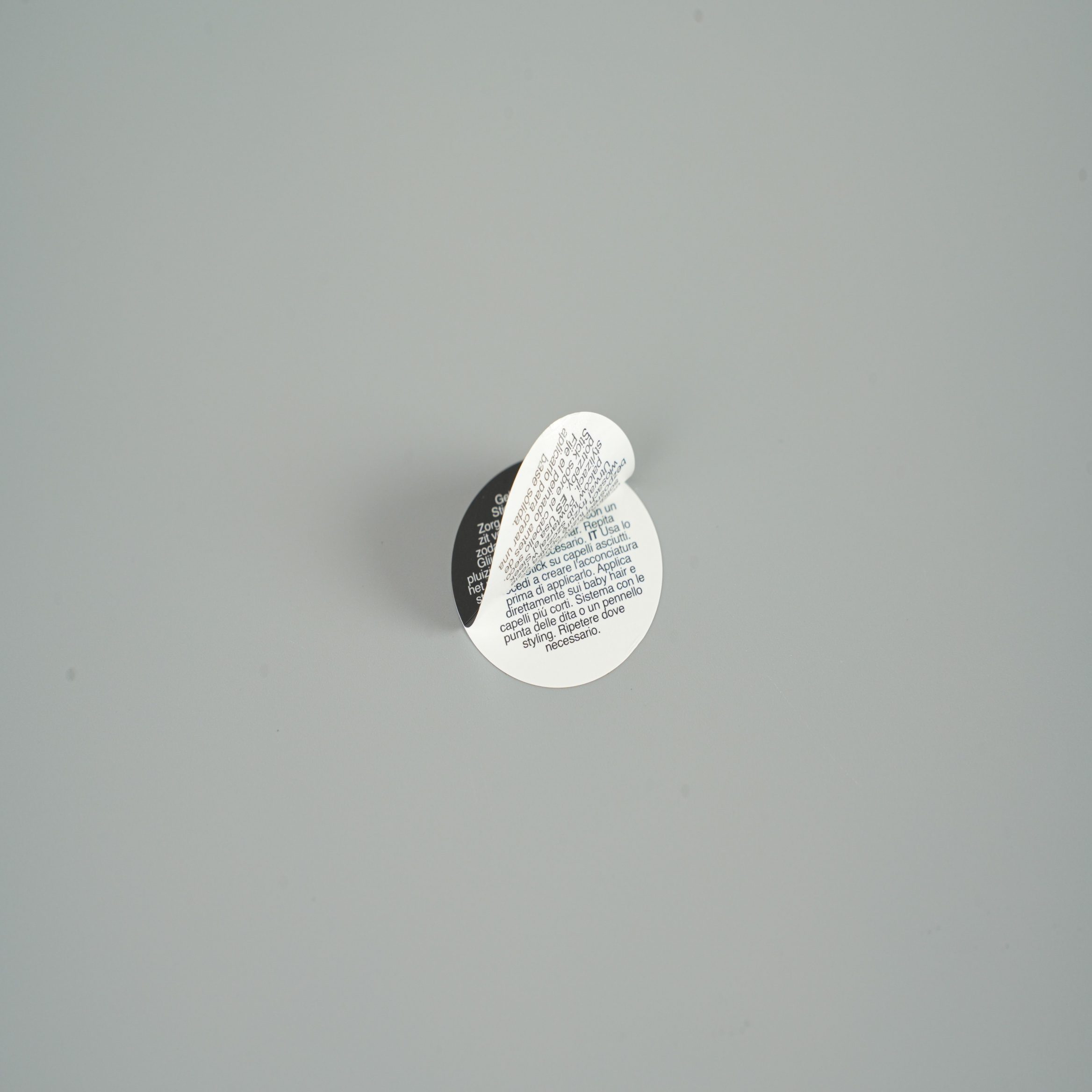
Cosmetic packaging is harder on labels than most other product categories. The container is often small, curved, and handled daily, and the product inside may be water-based, oil-based, or alcohol-based. That combination means the label has to stay attached, stay legible, and keep its colour through repeated contact with moisture, oils, and friction.
The surface matters as much as the material. Glass dropper bottles, HDPE tubes, PET jars, and soft squeeze tubes each behave differently, and the same label stock will not suit all of them. That is why labels for cosmetics should be specified against the actual container, not chosen from a catalogue.
Which Label Material Works Best for Cosmetics and Skincare Packaging?
The four material families used most often for cosmetic product labels are PP synthetic paper, PET, PE, and paper. Each fits a different container and use case.
PP synthetic paper — waterproof, oil-resistant, and tear-resistant, with good printability. A practical all-round choice for skincare labels, shampoo, and body wash bottles.
PET — high strength and high transparency. Suits a "no-label look" on glass and clear bottles, and resists alcohol-based formulas better than paper.
PE — soft and flexible, so it deforms with squeeze tubes instead of wrinkling or lifting. A common choice for hand cream and custom lotion labels.
Paper — economical and easy to print in rich colours, but not waterproof. Best for dry-area products or secondary packaging.
Because cosmetic containers are often curved, material thickness also matters. A thinner film follows a curved surface more smoothly, while a thicker stock holds a flatter, more rigid shape on boxed or rigid packaging. For a premium finish on skincare and fragrance, a matte film membrane over PP synthetic paper gives a smooth, scratch-resistant surface that protects the print.
How Do You Match the Adhesive to the Container?
The adhesive is usually the part that decides whether a cosmetic label stays on the bottle. The two most common options for cosmetic label printing are water-based and hot melt adhesives.
Water-based adhesive — clean, reliable adhesion on smooth surfaces such as glass and rigid plastic. Well suited to labels for beauty products stored and used at room temperature.
Hot melt adhesive — stronger initial tack and better performance on rougher or slightly uneven surfaces. Useful where the label must grip quickly during high-speed application.
Before production, tell your cosmetic label printer the container material, the application temperature, and how the product will be stored. A label for a bathroom bottle that sees daily humidity has different requirements from one applied to a boxed product kept dry.
What Finishing Options Improve Shelf Appeal?
Finishing is where Custom Labels for beauty products gain their premium feel. A matte finish resists scratches and fingerprints and protects the print from fading — a good match for high-end skincare and beauty product labels. A gloss finish, by contrast, makes colours look more saturated and vivid, which suits bright, youthful ranges.
Metallic finishes such as gold foil are widely used for lipstick labels, fragrance, and gift sets, where a reflective accent signals a higher price point. For brands testing a new line, a small batch of custom gold foil labels for cosmetics is a low-risk way to check the finish before committing to a large run.
If you are printing several product lines at once, keep one label structure and vary the finish — this keeps the range visually consistent while controlling cost. For hair labels and refill ranges, a simple matte or gloss choice often matters more than an elaborate effect.
What Should Buyers Confirm Before Ordering Custom Cosmetic Labels?
A short checklist before bulk production prevents most label problems. Confirm each of these with your supplier:
| Item | What to confirm |
| Container material | Glass, plastic, metal, or paper — this decides the adhesive and the surface behaviour. |
| Surface shape | Smooth, curved, or textured — affects label flexibility, size, and how neatly it wraps. |
| Storage and use conditions | Humidity, heat, sunlight, or cold — affects the choice of material and finish. |
| Label size and shape | Must fit the panel without covering required information such as ingredients or warnings. |
| Adhesive type | Permanent, removable, or waterproof, matched to the container and application method. |
| Print run | Small batch or bulk — affects the printing process, unit cost, and lead time. |
Buyers sourcing from overseas should also agree on carton and pallet format, lead time, and which documents accompany the shipment. If you let us know your container type, product formula, and target market, we can confirm the most suitable material, adhesive, and finishing for your custom cosmetic labels — send your requirement here.
Conclusion
Choosing custom cosmetic labels comes down to matching four things: the material to the container, the adhesive to the surface and storage conditions, the finishing to the brand position, and the print run to your launch plan.
Brands that confirm these points before ordering avoid the most common problems — labels that lift off curved bottles, colours that fade, or reprints after artwork has already been approved. Whether you need skincare labels, cosmetic product labels, or a small test batch of gold foil labels, sharing the container and product details up front turns a general enquiry into a specification a manufacturer can quote accurately against.
If you are sourcing custom cosmetic labels or custom product labels for beauty and personal care packaging, send us your requirement and we will confirm the suitable structure for your order.
