

 English

Stickers are used everywhere—from product packaging and retail boxes to bottles, promotional materials, shipping packages, and industrial products. But when choosing a sticker label, buyers often have several practical questions: Are stickers safe? Is sticker adhesive safe? How sticky are stickers? Can stickers withstand water and temperature changes? And are they suitable for food packaging?
The short answer is that most stickers are safe when they are manufactured with materials and adhesives appropriate for their intended application. However, not every sticker is suitable for every environment. The safety, adhesion, and durability of a sticker depend on the combination of its face material, adhesive, printing ink, coating, surface, and operating conditions.
What Makes a Sticker Safe?
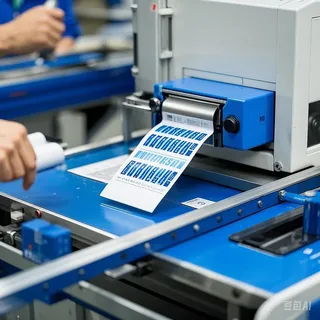
A sticker is not made from adhesive alone. A typical label construction may include a face material, printing layer, coating or laminate, adhesive, and release liner. Each component can affect the final performance of the label.
Common face materials include paper, PET, PP, and other specialty films. Paper labels are often suitable for general indoor packaging and product identification, while synthetic materials such as PET and PP can provide better resistance to moisture, abrasion, and demanding environments.
The adhesive is equally important. A label designed for a cardboard package does not necessarily perform well on glass, plastic, metal, or textured surfaces. For this reason, professional label manufacturing normally starts with understanding the application rather than simply selecting the strongest available adhesive.
Is Sticker Adhesive Safe?
The safety of a sticker adhesive depends on its formulation and intended use.
Common adhesive categories include permanent adhesives, removable adhesives, and repositionable adhesives. Permanent adhesives are designed for long-term bonding, while removable adhesives are intended for applications where the label needs to be removed without excessive residue or surface damage.
For general packaging, product labeling, and promotional applications, adhesive selection is primarily related to bonding strength and durability. However, applications involving food, cosmetics, medical products, skin contact, or other regulated environments require more careful material selection and compliance evaluation.
For example, the U.S. FDA treats adhesives and other substances that come into contact with food as food-contact substances. Their safety is evaluated according to their intended use and conditions of use rather than simply by whether the word “adhesive” appears on the label.
How Sticky Are Stickers?
“Stickiness” is actually more complicated than it sounds.
The bonding performance of a pressure-sensitive label can be evaluated through several characteristics, including initial tack, peel adhesion, and shear resistance.
Initial tack describes how quickly an adhesive bonds to a surface when the label is first applied. A label with high initial tack can adhere quickly with relatively light pressure.
Peel adhesion refers to the force required to remove the label from the surface. This is particularly important when a label needs to remain attached throughout transportation, storage, and product use.
Shear resistance measures the ability of an adhesive to resist movement when a continuous force is applied.
Therefore, the strongest adhesive is not necessarily the best adhesive. A packaging manufacturer may need strong permanent adhesion, while a retailer may prefer a removable label that leaves minimal residue.
Why Do Some Stickers Peel Off?
Even a high-quality sticker can fail if it is used on an unsuitable surface or under unsuitable conditions.
Surface contamination is one of the most common causes. Dust, oil, grease, moisture, and other contaminants can reduce the actual contact between the adhesive and the substrate.
Temperature also matters. Very low temperatures can reduce the initial bonding performance of some adhesives, while excessive heat may soften certain adhesive systems and affect their long-term holding power.
Surface texture is another factor. Smooth glass and metal generally provide a more consistent bonding surface than rough cardboard, unfinished wood, or textured plastic.
For commercial applications, buyers should therefore provide information about the surface material, application temperature, service temperature, humidity, expected service life, and removal requirements before selecting a custom sticker label.
Are Waterproof Stickers Safe?
Waterproof performance and safety are two different properties.
A waterproof sticker is designed to resist water or moisture, but this does not automatically mean that it is suitable for food contact, skin contact, high temperatures, or chemical exposure.
For applications exposed to moisture, synthetic label materials such as PET or PP can offer advantages over conventional paper. Protective coatings or laminates can further improve resistance to water, abrasion, and fading.
JINXIN's Sticker Labels, for example, are designed with durability, wear resistance, fade resistance, and waterproof performance in mind, making material and construction selection important for different labeling requirements.
Are Stickers Safe for Food Packaging?
This is one of the most important questions for food and beverage brands.
A label should not be considered suitable for food contact simply because the paper or film itself is described as “food grade.” The complete label construction needs to be considered, including the adhesive, ink, coating, substrate, and intended conditions of use.
Under 21 CFR §175.125, certain pressure-sensitive adhesives may be used as the food-contact surface of labels and tapes applied to specified food products when the applicable formulation and conditions are satisfied.
Similarly, 21 CFR §175.105 establishes conditions under which certain adhesives can be used as components of articles intended for packaging, transporting, or holding food.
This means that a professional buyer should avoid asking only, “Is this sticker FDA approved?” A better question is whether the specific label construction and adhesive system are suitable for the intended application and conditions of use.
Do Stickers Leave Residue?
Whether a sticker leaves adhesive residue depends mainly on the adhesive formulation, surface, application time, temperature, and removal method.
Permanent labels are intentionally designed to maintain strong adhesion and may be more difficult to remove cleanly. Removable labels use adhesive systems designed to facilitate removal under specified conditions.
If clean removal is important—for example, on reusable containers, promotional displays, glass surfaces, or temporary product identification—buyers should specify the removal requirement before production.
How Long Do Sticker Labels Last?
Sticker durability depends on the complete label construction and the environment in which it is used.
Indoor product labels may have relatively simple requirements. Outdoor labels, industrial labels, and labels exposed to sunlight, moisture, chemicals, friction, or temperature fluctuations require more specialized materials and adhesives.
The following factors can influence label service life:
Face material
Adhesive formulation
Printing ink
Protective coating or laminate
UV exposure
Temperature
Humidity
Surface condition
Mechanical abrasion
Chemical exposure
For this reason, there is no universal answer to how long a sticker will last. A properly selected label can perform reliably for its intended service period, while an unsuitable label may begin peeling, fading, or cracking much sooner.
How Should Businesses Choose the Right Sticker?
For businesses purchasing Custom Labels, the selection process should begin with the application rather than the appearance.
Before ordering, consider these questions:
What surface will the sticker be applied to?
Glass, cardboard, plastic, metal, and textured surfaces can require different adhesive solutions.
Will the label contact water or humidity?
If yes, a moisture-resistant face material and adhesive system may be necessary.
Will the label be exposed to heat or cold?
Temperature ranges should be communicated to the label manufacturer.
Does the label need to be permanent or removable?
This determines the appropriate adhesive category.
Will the label be used around food?
If so, the complete label construction and intended conditions of use should be evaluated for applicable food-contact requirements.
Does the label need to resist UV light, chemicals, abrasion, or outdoor exposure?
These requirements may affect the choice of film, coating, ink, and adhesive.
Final Thoughts
A sticker is more than a printed piece of paper with glue on the back. Its performance is determined by the interaction between the label material, adhesive, printing process, surface, and application environment.
For general product labeling, packaging, promotional use, and industrial applications, the right combination of materials can provide reliable adhesion, attractive printing, and long-lasting performance. For specialized applications such as food packaging, the requirements become more specific and should be evaluated according to the intended use and applicable regulations.
For brands and distributors looking for custom Sticker Labels, working with an experienced label manufacturer can help ensure that the material, adhesive, printing, and finishing options are matched to the actual application—not simply chosen based on appearance or adhesive strength.
