

 English

Choosing the right custom label supplier can have a direct impact on product presentation, packaging performance, and supply chain efficiency. For brands, manufacturers, retailers, and packaging companies, the best supplier is not necessarily the one offering the lowest price. Material compatibility, adhesive performance, printing technology, customization capabilities, quality control, production capacity, and delivery reliability all need to be considered.
For businesses sourcing custom product Packaging Labels, working with a manufacturer that understands different substrates and application environments can help reduce labeling problems and maintain consistent quality across production runs.
This guide introduces 10 major types of custom label suppliers worth considering and explains what buyers should evaluate before placing an order.
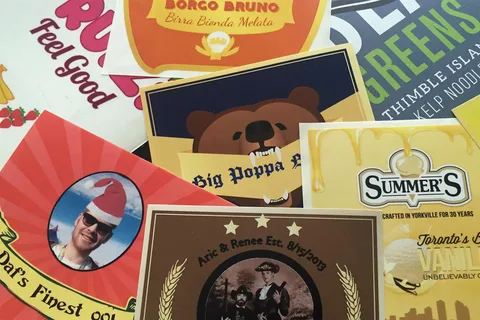
1. Custom Label Manufacturers
A professional custom label manufacturer is usually the most flexible option for businesses with specific packaging requirements.
Manufacturers can provide customized label dimensions, materials, adhesive types, printing methods, finishes, and die-cutting options. They can also support sampling and larger production runs.
When evaluating a custom label manufacturer, buyers should look at:
Manufacturing capabilities
Available label materials
Printing technologies
Adhesive options
Quality control procedures
Customization capabilities
Production capacity
Lead times
For businesses that need labels designed specifically for their products, a direct manufacturer can also simplify communication between product development and production.
JINXIN provides custom label solutions for different product and packaging applications, supporting customized label structures and printing requirements.
2. Adhesive Label Suppliers
Adhesive performance is one of the most important factors in product labeling.
Adhesive label suppliers provide labels designed to bond directly to surfaces such as glass, plastic, metal, cardboard, and other packaging substrates.
However, different surfaces require different adhesive characteristics. A label designed for smooth glass may not perform in the same way on flexible plastic or textured cardboard.
When sourcing adhesive labels, buyers should consider:
Surface material
Surface cleanliness
Application temperature
Storage temperature
Moisture exposure
Required service life
Removable or permanent adhesion
This is particularly important for products that will be transported, refrigerated, exposed to humidity, or handled frequently.
3. Waterproof Label Suppliers
Products exposed to water or humidity require labels with appropriate moisture resistance.
Waterproof labels are commonly used for beverages, cosmetics, personal care products, refrigerated goods, outdoor products, and household containers.
A suitable supplier should be able to provide label materials and adhesive constructions that maintain acceptable performance under the intended environmental conditions.
Buyers should ask about:
Water resistance
Humidity resistance
Material durability
Adhesive stability
Printing durability
Resistance to condensation
Choosing a waterproof label based only on the material name is not enough. The complete label construction should be evaluated against the actual application.
4. Cosmetic Label Suppliers
Cosmetic packaging often places equal importance on appearance and performance.
Cosmetic bottles, jars, tubes, and containers may have curved surfaces, smooth plastic substrates, glass surfaces, or specialty finishes. Labels therefore need to combine reliable adhesion with high-quality visual presentation.
Cosmetic brands may look for:
High-resolution printing
Premium finishes
Precise die cutting
Strong adhesion
Moisture resistance
Small-format labeling
Custom shapes
For skincare and beauty products, label design is often an important part of the overall packaging experience.
5. Food Packaging Label Suppliers
Food packaging presents a different set of requirements because labels may be exposed to moisture, refrigeration, oils, temperature changes, and repeated handling.
Depending on the application, food labels may be used on:
Jars
Bottles
Boxes
Pouches
Frozen food packages
Food containers
Suppliers should understand the packaging substrate and environmental conditions before recommending a label structure.
For food brands, buyers should also clearly communicate the expected storage environment and labeling method during the quotation stage.
6. Multi-Layer Label Manufacturers
Multi-layer labels are useful when a product requires more information than can comfortably fit on a conventional single-layer label.
They can provide additional printable space while keeping the external footprint of the label relatively compact.
Common applications include products requiring:
Multiple languages
Detailed instructions
Regulatory information
Usage information
Promotional content
Variable product information
When evaluating a multi-layer label manufacturer, buyers should consider the label construction, opening mechanism, readability, adhesive performance, and printing quality.
For international products, multi-layer structures can be particularly useful when packaging space is limited but information requirements are extensive.
7. Product Label Printing Companies
Product Label Printing companies focus on producing labels for branded products, retail packaging, and consumer goods.
A capable printing supplier should offer more than basic printing. Buyers should evaluate the complete production process, including:
Artwork preparation → Material selection → Printing → Finishing → Die cutting → Inspection → Packing
Different printing technologies may be suitable for different order volumes, designs, materials, and color requirements.
When comparing suppliers, ask whether they can provide samples before mass production and whether the production process can maintain consistent color and dimensional accuracy.
8. Industrial Label Suppliers
Industrial products may require labels with higher durability than standard retail packaging.
Applications can include equipment, tools, electronic components, machinery, storage containers, and product identification.
Industrial label buyers may need to consider resistance to:
Abrasion
Heat
Moisture
Chemicals
Oil
Outdoor exposure
A reliable industrial label supplier should be able to discuss the actual operating environment rather than recommending a standard label for every application.
9. Wholesale Custom Label Suppliers
Wholesale suppliers are suitable for businesses that require larger quantities of labels and are looking for consistent supply over time.
For bulk buyers, unit price is important, but it should not be the only consideration.
A proper supplier evaluation should include:
MOQ
Production capacity
Repeat-order consistency
Quality control
Packaging
Lead time
Shipping arrangements
Communication efficiency
A lower unit price may not provide a real cost advantage if inconsistent quality results in waste, relabeling, or production delays.
For long-term purchasing, buyers should evaluate the supplier's ability to maintain stable specifications across multiple production batches.
10. Custom Packaging Label Manufacturers
Custom packaging label manufacturers provide a broader solution for brands that need labels developed around specific packaging materials, product shapes, and application requirements.
They may support different label structures for:
Glass packaging
Plastic containers
Metal packaging
Paperboard
Flexible packaging
Curved surfaces
The advantage of working with an experienced manufacturer is that label material, adhesive, printing method, finishing, and dimensions can be considered together rather than selected independently.
For businesses looking for a long-term packaging partner, this integrated approach can make product development and repeat purchasing more efficient.
JINXIN provides custom label manufacturing solutions for product packaging and different application requirements, including adhesive labels, multi-layer labels, and customized packaging label solutions.
What Should You Ask a Custom Label Supplier?
Before selecting a supplier, buyers should provide enough information for the manufacturer to understand the actual application.
Important questions include:
What Material Will the Label Be Applied To?
Glass, PET, PP, PE, metal, cardboard, and flexible packaging can have different adhesion requirements.
Where Will the Product Be Used?
Outdoor exposure, refrigeration, humidity, heat, oil, and chemicals can all influence label selection.
How Will the Label Be Applied?
Manual application and automatic labeling equipment may require different label dimensions, roll configurations, and winding specifications.
How Long Must the Label Last?
A short-term promotional label may have very different requirements from a durable product identification label.
What Printing and Finishing Is Required?
Brands should determine whether they need standard color printing, specialty finishes, variable information, or other customized effects.
How to Choose the Right Custom Label Supplier
A professional supplier evaluation should look beyond price. A useful comparison framework is:
Material Compatibility → Adhesive Performance → Printing Quality → Customization → MOQ → Production Capacity → Quality Control → Lead Time → Certifications → Communication
The right supplier should be able to explain why a particular label construction is appropriate for the product instead of simply quoting a standard specification.
For example, a label for a refrigerated beverage bottle may require different material and adhesive properties from a label used on a dry cardboard box. Likewise, a cosmetic product with a curved container may require a different construction from a flat retail package.
Why Work Directly With a Label Manufacturer?
Buying directly from a manufacturer can provide several advantages for B2B buyers.
It can make communication about specifications more efficient, provide greater control over customization, and simplify quality management for repeat orders.
A direct manufacturing relationship is particularly useful for brands that require:
Custom dimensions
Specific adhesive performance
Special materials
Custom printing
Multi-layer constructions
Consistent repeat production
For businesses developing new packaging, early communication with the manufacturer can also help identify potential material or application issues before mass production begins.
Final Thoughts
The best custom label supplier depends on the product, packaging material, application environment, order volume, and required performance.
Instead of choosing a supplier based solely on price, buyers should evaluate the supplier's technical capabilities, material options, adhesive knowledge, printing quality, customization experience, production capacity, and quality control.
For companies sourcing custom product and Packaging Labels, selecting a manufacturer that can provide both technical guidance and reliable production can make a significant difference in long-term packaging performance.
JINXIN specializes in customized label manufacturing and provides label solutions for different products, materials, and packaging applications. Visit the JINXIN website to explore custom label solutions and discuss your packaging requirements.
