

 English

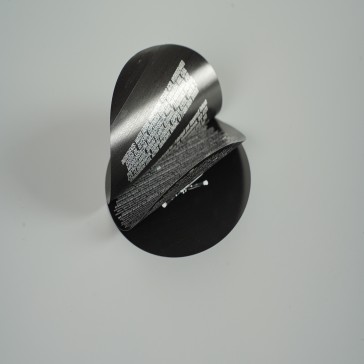
Custom Multi Layer Labels are manufactured using a combination of face materials, adhesives, release liners, and printing materials. The right combination depends on the product's packaging surface, storage environment, information requirements, and labeling method.
Because Multi Layer Labels contain additional printable surfaces, material selection is important for ensuring readability, durability, and reliable opening and closing performance.
1. Paper Materials
Paper is a common choice for multi layer labels used on products stored under normal conditions.
Coated paper provides a smooth surface for detailed text, logos, and color printing. Uncoated paper offers a more natural appearance and can be suitable for simpler designs.
Paper labels are often used for cosmetics, dry food packaging, household products, and promotional applications. However, standard paper may be less suitable for prolonged exposure to moisture, oils, or abrasion unless additional protection is applied.
For example, a skincare brand may choose coated paper for a peel-back label to achieve clear printing of ingredients and usage instructions.
2. Synthetic Film Materials
Synthetic films are commonly selected when labels require better moisture resistance, flexibility, or durability.
Polypropylene (PP): Lightweight and moisture-resistant, making it suitable for many consumer Product Labels.
Polyethylene (PE): Flexible and useful for containers or packaging surfaces that can deform during handling.
Polyester (PET): Offers good dimensional stability and durability for applications requiring stronger resistance to handling or environmental exposure.
The choice depends on the container shape, label construction, printing method, and expected conditions. For instance, a flexible PE bottle may benefit from a compatible flexible label material, while a product requiring greater dimensional stability may use PET.
3. Adhesive Materials
Adhesives determine how well a multi layer label attaches to the packaging and whether its layers can be opened and reclosed as intended.
Common options include permanent adhesives, removable adhesives, and specialized repositionable or resealable adhesive systems.
Permanent adhesives are suitable when the label should remain firmly attached. Removable adhesives may be useful when clean removal is required. For peel-back designs, the adhesive system must balance secure attachment with controlled opening and reliable reclosure.
Adhesive performance depends on the container material, surface energy, temperature, moisture, and application conditions. Testing on the actual packaging surface is recommended before mass production.
4. Release Liners and Supporting Materials
Release liners protect the adhesive before application and allow labels to be dispensed efficiently. Common liner materials include glassine paper, coated paper, and PET film.
Paper liners are widely used for conventional label converting, while PET liners may be selected when dimensional stability or specialized processing requirements matter.
In multi layer labels, additional materials may also be used to create fold-out pages, peel-back sections, or booklet structures. These components must work together to ensure smooth opening and accurate alignment during converting and application.
5. How Do You Choose the Right Materials for Custom multi layer labels?
Material selection should begin with the packaging requirements rather than appearance alone.
| Selection Factor | Recommended Consideration |
|---|---|
| Container surface | Check compatibility with glass, plastic, metal, or flexible packaging |
| Environmental exposure | Evaluate moisture, oils, heat, and abrasion |
| Information volume | Choose a suitable peel-back or booklet structure |
| Adhesion requirements | Determine whether permanent, removable, or resealable adhesion is needed |
| Printing requirements | Confirm compatibility with the intended printing process |
| Product lifecycle | Consider storage, transportation, use, and disposal |
For example, a cosmetic product sold in multiple countries may require a moisture-resistant film label, a multi-panel structure for translated information, and an adhesive that remains secure throughout normal use.
Conclusion
Custom multi layer labels can combine paper or synthetic film face materials with suitable adhesives, release liners, and specialized layered structures. Each component affects the label's appearance, durability, application performance, and usability.
For OEM buyers, providing packaging dimensions, container material, artwork, environmental requirements, and label functionality helps manufacturers recommend a suitable construction and produce consistent results.
